The 7 Habits of Financially Healthy Women
An excerpt from The 7 Habits of Financially Healthy Women, by Crystal Paine
Friends. I am really excited to share the introduction to this awesome new book with you. It’s a bit long, but goodness– it is SO relatable (to me at least! ) and — honestly, I felt empowered just reading it! Finances have never been my strong suit, and I’ve so appreciate how gracious and kind Crystal is on this topic. Also — I’ve been to Crystal’s home (she interviewed me when I was in Tennessee a couple years ago) and I am happy to tell you that she and her family are so down to earth, genuine, and lovely. I hope you can take the time to read this excerpt, then be sure to purchase this awesome new book!
My heart was pounding. My chest felt tight. My skin felt clammy.
I had been going over the numbers in my head repeatedly and I was starting to feel panicked.
We had been married for almost five years. We had a toddler and a newborn. I had just walked through some scary health issues (more on that in the next chapter). Our bank account was quickly dwindling. And there wasn’t enough money coming in to cover our monthly expenses.
My husband, Jesse, had graduated from law school and then, due to things outside our control, our neat little plan for the next five years of our lives had gone up in smoke.
The good job he was supposed to have for a few years after law school didn’t pan out. So we scrambled to find an alternative and ended up moving suddenly when another job opened up in a city an hour away.
But then that job turned out to not be at all what we’d hoped, and it lasted only a short while.
So there we were with two little kids, a dangerously low bank balance, no job, and a lot of bills.
It was scary. Honestly, many days it felt more than scary; I think terrifying is a more appropriate word.
Maybe you’ve felt that same breathless fear when it comes to your finances—the one that tightens your chest and makes everything blur around you.
Maybe that’s exactly why you picked up this book. Because the financial pressure feels heavy right now, and you’re not just scared about your future: There are many moments when you feel downright terrified.
Perhaps you’ve found yourself lying awake at night, run-ning the numbers in your head, feeling overwhelmed by and anxious about all the what-ifs and unknowns, wondering how in the world you’re going to make ends meet and worried what tomorrow and the next few months might hold. You may have even thought, Am I going to make it?
You Are Not Alone in Your Money Worries
As I was writing this book, I surveyed nearly four thousand women and asked them to anonymously share their greatest fears around money. You know what surprised me most about the results of the survey?
Almost every woman—whether she was barely scraping by or was doing well financially—admitted that she was carrying some level of fear when it came to money or that she felt some uncertainty about her financial future.
Whether you are feeling paralyzed by panic over the unknowns of the future or maybe just mildly worried over where you are financially, I want you to know you are not alone!
Let me share just a few of the most common fears women said they wrestle with. As you read, put a checkmark next to the ones that sound familiar to you:
“There are too many bills and not enough income.”
“I feel stretched thin. There’s never enough time, never enough money.”
“I feel this heavy weight that I won’t be able to give my kids the life I want for them.”
“What if something terrible happens and wipes out our savings?
“I make decent money, so why doesn’t it feel like enough?” “I wish I felt more confident about my financial future.”
If you saw yourself in any of those statements, I want you to know two things:
- You are not alone.(Yes, that bears repeating.)
- You are in the right place.
I hope this list helps you feel seenand encouraged. Because the truth is, while most women carry some kind of financial fear, far too few of us talk about it.
And that’s exactly why I wrote this book.
I want to walk alongside you like a friend with a flashlight, helping you shine a light on your finances—without judgment, without shame, and with lots of grace. Think of me as your cheerleader and guide, here to give you practical steps, simple encouragement, and just enough of a loving nudge to help you move forward.
Why Trust Me?
I’ve been blogging about saving money for over twenty years (come hang out with us at MoneySavingMom.com for daily deals and encouragement!), but in this book, I want to take you back before all that. Before the website. Before the books. Before the podcast. Before Instagram.
Back to the little girl watching her parents work hard, save diligently, pay off their house, and build a debt-free life—one decision at a time.
You’ll hear stories from those years—about living in an old construction trailer with no oven or air conditioning, battling mice infestations, and having windows that leaked like faucets when it rained. You’ll also see how my parents’ quiet commitment to living below their means planted seeds in my heart that would later grow into one of the boldest decisions my husband and I ever made: to live debt-free from day one of our marriage.
I’ll share how we stretched our dollars when money was so tight in our early years of being married. And by tight, I really mean that. We sometimes had only seventeen to twenty dollars to buy all of our groceries for all the meals for the week for the two of us.
You’ll see how those tiny choices turned into big changes over time. I won’t sugarcoat the truth: It required a lot of sacrifices, and there were many hard seasons (like the one I shared at the beginning of this introduction).
But I am here—years later—to tell you that the little habits we established early in our marriage have yielded a harvest of financial fruit. And I believe the same can prove true for you!
In the pages ahead, I’ll equip you with the tools and strate-gies that helped us shift from barely scraping by to thriving. I want you, too, to feel confident, purposeful, and excited about your financial future.
Whether you’re hoping for just a few good money-saving ideas or you are looking for a complete financial overhaul, I wrote this for you. It’s not just a collection of stories or tips. It’s a blueprint for building a legacy—one small, faithful step at a time.
Here’s How We’ll Do It
I truly believe with all my heart that you, yes you, can achieve financial health. Even if you feel like you’ve failed in the past and you don’t have good money skills or financial discipline, that does not change my belief. Because here’s the truth: Today is a new day.
In the chapters that follow, I will help you:
- Conquer the fear and limiting beliefs that whisper you “just aren’t good with money,” “aren’t disciplined enough,” or “never follow through.”
- Craft a personalized road map for long-term financial health—one that fits your unique personality, priorities, and purpose.
- Create a flexible daily and weekly plan that gives you space to meet your financial goals andstillenjoy your life, save for the future, and invest in the causes you care about.
- Cultivate irresistible accountability that keeps you con-sistent and committed, even on the hard days—because lasting change thrives in community.
So take a deep breath, friend. You’ve already taken the first brave step by opening this book.
My greatest desire is that these pages will spark fresh life and renewed excitement in your financial journey. That you’ll find practical tools, new inspiration, and most of all, hope.
No matter your current situation . . . No matter your income or job . . .
No matter your background, education, or where you live . . . You can live a financially healthy life.
Why This Works
The Compound Effect of Small Choices
I walked into the bathroom expecting to take a routine test. I had no idea it was about to turn my world upside down for the next few weeks.
It was 2007. I was 34 weeks pregnant with our second child. My midwife had come to our house for what I thought was just another standard prenatal checkup, nothing out of the ordinary. But that seemingly simple appointment would be the beginning of a whirlwind of unexpected events.
Just like I had done during every other visit, I headed to the bathroom to pee in the little cup so my midwife could run the routine pregnancy screenings she did at every visit.
But this time, something wasn’t right.
She looked at the results—and immediately picked up the phone. Within minutes, we were on our way to the hospital. I was admitted on the spot.
Things moved so quickly that my brain could barely keep up. Words like leukemia were suddenly being whispered. My hospital room became a revolving door of doctors and nurses asking urgent questions and drawing vial after vial of blood.
That first night, I lay in the hospital bed alone—my hus-band home with our toddler—and I couldn’t sleep. I tossed and turned, mind racing, heart pounding.
I felt so scared—not just for the baby growing inside me, but for what this might mean for all of us.
What if I had a life-threatening illness? What ifI had only months left to live?
How would my husband manage with two little ones without me?
What kind of trauma would this bring to our family?
I was so young. My husband needed me. My babies needed me. My mind was spiraling.
After days in the hospital undergoing tests and being seen by dozens of medical professionals—with a whole lot of fright-ening words being tossed around—the results finally came in. And what did the doctors find?
No life-threatening illness. No cancer. No mystery condition. Just a very severe case of pregnancy-induced anemia.
My platelet count and hemoglobin were dangerously low, and my body had gone into crisis mode. The cause? Not some fluke or a freak condition. It was a slow deterioration, the result of my not taking care of myself for months.
Yes, being pregnant contributed to it. And yes, that season of life was full of challenges. But the truth was undeniable: I had been neglecting my health.
Skipping meals. Skimping on sleep. Living in a constant state of exhaustion. Ignoring the signs my body was giving me to slow down and rest.
It wasn’t one big decision; it was dozens of little ones, day after day, that added up to my body finally crying, “Enough!” Ultimately, my labor was induced early, and I gave birth to a strong, healthy baby girl—our second daughter. With rest and attention, my body healed. My blood work returned to more normal ranges. And I was pronounced back to full health.
That was nearly two decades ago, but I’ve never forgotten the lessons I learned lying in that hospital bed. Once I was well again, I made a decision: I was going to start paying attention.
Not only to my physical health, but to the small, seemingly insignificant choices that add up to big results over time.
I started on a journey to better health. I began to eat more iron-rich foods, tried not to skip meals (especially breakfast), prioritized sleep more, increased my exercise, made time for rest and relaxation, cut back some on my workload . . . and I began paying more attention to the little indications my body would give me that things were not okay or were starting to get out of whack.
Because little choices matter. And the same is true when it comes to your finances.
In the moment, it might feel like our daily choices aren’t making much of a difference.
But over time? They matter more than we realize.
When small actions are repeated consistently, they com-pound into something powerful—whether in our health, our relationships, or our finances.
Sure, there are always factors in life that are outside our control. Genetics, age, the economy, the job market, the cost of living—they all play a part. But even with those realities, there’s still somuchwe can take ownership of.
This is just as true with our financial health as it is with our physical health.
The choices we make with money on a daily basis don’t just impact the here and now. They shape our future.
As I recounted in the introduction, we’ve had our fair share of difficult financial seasons. We’ve lived on very little. We’ve had months when there was almost nothing in the bank account, and our meager income was not enough to cover anything but the most basic of basics.
It was during those times that our commitment to healthy financial habits mattered most. In fact, I look back years later and realize that those months and years when money was so tight and we chose to make a lot of sacrifices and forgo so many purchases and make do with what we had . . . those little daily choices laid the foundation for where we are today.
Note: I know that not all choices are made on a level playing field. Sometimes, what looks like a poor decision from the outside really was the best option available in the moment.If you can relate to this, know that I’m over here cheering for you as you take one small baby step at a time in building your financial health!
So What Is Financial Health?
The fact that you’re reading this book tells me that you’re being intentional about building a future that’s financially healthy. (I’m so proud of you!) But the truth is that a lot of us didn’t have the opportunity to see what financial health looked like when we were growing up.
Maybe you were raised by a single parent who had limited job opportunities but worked hard to make ends meet.
Or maybe you were raised by parents who made enough, but spent their money recklessly as soon as it came in.
Or perhaps you grew up financially comfortable and had caregivers who were largely responsible with their money, but you never saw them being thoughtful in their spending; maybe they were very stingy when it came to spending money on others and didn’t practice generosity.
A lot of us haven’t had the opportunity to see what financial health and responsibility looks like.
So before we get any further in the book, let’s define what financial health is. Because if I’m going to teach you habits that add up to financial health, I think you probably first want to know what financial health is!
Here’s my definition: Financial health is the quiet confidence and calm that comes from managing your money with intention. It is seeing money as a tool to bring freedom instead of fear. It is being in a position where money serves your life in-stead of running your life.
Financial health does not mean you’ve achieved a certain standard of living or have a predetermined amount of money in your bank account. Rather, it’s your mindset around money. It’s viewing your finances with clarity and purpose and having a plan for your financial future that gives you calm instead of chaos.
Financially healthy women intentionally build and maintain habits that help them live within their means, prepare for the future, and give generously—starting right where they are, with what they have.
What Financial Health Isn’t
Being financially healthy does not mean you have to
have a high income. You can have a strong income and still live paycheck to paycheck. Conversely, you can have a modest income and thrive financially.
be completely debt-free. Many people are financially healthy while still paying off a mortgage, student loans, or other debt.
be an expert at financial lingo.You don’t need to be a fi-nance whiz to make wise, healthy money choices.
never spend money on fun or frivolous things. Being finan-cially healthy means making space for joy without guilt.
stick to a budget meticulously and rigidly every month. A healthy financial life allows for flexibility, life changes, and grace when plans shift.
own a home.Contrary to what many will tell you, I believe it can sometimes be a smart financial decision to rent a home instead of buy one.
have a big savings account balance right now.Financial health starts with intentional small steps. It’s not dependent upon having a hefty chunk of money in the bank.
be ridiculously frugal or restrictive. Financially healthy people spend on what matters to them and cut back on what doesn’t.
have a stable income. Many people with variable or free-lance income still manage money in healthy, confident ways. (By the way, my husband and I never had set in-come. Due to owning our own businesses and having jobs with varying hours, our income has always fluctu-ated from month to month.)
never make mistakes.Everyone makes money mistakes—financial health means learning from them, not living in shame over them.
The Road to Financial Health
The road to financial health begins with setting attainable goals and creating a simple, sustainable game plan to reach them. Goals are what guide you as you begin to take small, purpose-ful steps forward.
Maybe your goal is to save to pay cash for a new car in two years.
Maybe your goal is to save up for your child to attend a state university a decade from now.
Or maybe your goal is to retire by sixty so you can spend more time volunteering with a nonprofit doing incredible work in the world.
Whatever it is, don’t underestimate the power of a clear financial goal. Why? Because setting goals gives your financial habits purpose, direction, and staying power.
Without a goal, it’s easy to lose motivation. But when you know why you’re saying no to impulse purchases or yes to pack-ing lunches instead of eating out, the sacrifice feels meaningful. It gives you perspective that makes it easier to stay consistent, even when progress feels slow.
Goals also create accountability. Writing them down and reviewing them regularly keeps you focused and honest. It’s a lot harder to splurge on something unnecessary when you’ve got a list of meaningful priorities hanging on your fridge or tucked into your journal.
And perhaps most importantly, goals build momentum. When you track your progress—especially in small monthly steps—you start to see growth. Even if you hit a setback or unexpected expense, those written goals remind you that you aremaking progress, even if it’s slower than you’d hoped. That is often the nudge you need to keep going.
So I encourage you to set your sights on a goal that truly matters to you and then use the Seven Habits of Financially Healthy Women to build your path toward it. These habits will help you stay intentional, motivated, and equipped for the journey ahead.
Your Daily Choices Matter More Than You Think
So often, we make little choices without much thought of the long-term impact. We’re going to be talking a lot in the pages that follow about how our simple habits and decisions add up over time—in either a positive way or a negative one.
I want to illustrate this with a simple example as we begin this journey together, one involving something all of us likely consume every day: water.
I’m a firm believer that staying hydrated is one of the easiest ways to care for your health, so I try to drink plenty of water every day. There are multiple options for obtaining water, and it might not seem like it matters much. But let’s run the numbers.
- Filling up a water bottle at home:
Approximately $0.03 per day × 365 days = $10.95 per year
- Grabbing a plastic bottle from a store-bought 24-pack:
Approximately $0.16 per day × 365 days = $58.40 per year
- Buying a single bottle from a vending machine or gas station:
Approximately $1.79 per day × 365 days = $653.35 per year
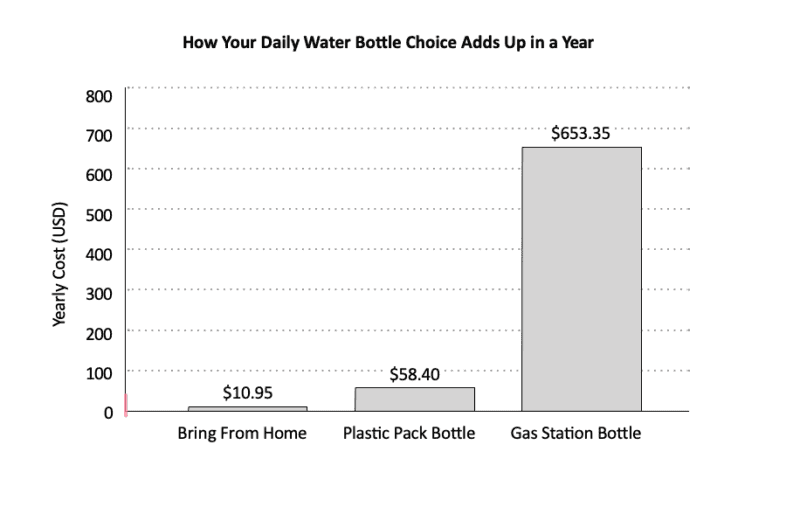
Yes, you read that right. The difference between grabbing a water bottle at a gas station every day when you are out and about or filling up a water bottle at home adds up to over $650 per year.
And over forty years? That simple habit could save you more than $26,000!!!
All from filling up a reusable water bottle each morning.
Now, I’m not telling you this to guilt you if you’ve ever bought a $1.79 water bottle. (I’ve done it too!) I’m sharing it to open your eyes to something empowering:
Your little choices aren’t so little after all.
Small Purchases That Can Add Up Over Time
Buying a bottle of water can feel like such a small purchase—and it is! But over time, purchasing a water bottle again and again can add up to a lot of money spent. Maybe you don’t buy bottled water, but perhaps there are other small purchases you often make that could add up in the same way:
Daily coffee shop drinks Drive-thru or takeout meals
App store purchases (games, upgrades, subscriptions) Streaming service subscriptions you rarely use
Snacks or gum at checkout lines
Impulse buys from online sales or social media ads
Monthly subscription boxes
ATM fees or banking fees
Late fees or small interest charges
Delivery fees and tips for frequent orders
Gas station add-ons (drinks, snacks, lottery tickets)
Cheap clothing or accessories “just because”
In-app purchases for entertainment or kids
Unused memberships (gyms, apps, subscriptions)
“Bargain” finds that weren’t planned and aren’t needed
When you start thinking in these terms, you realize just how much power you hold in your daily habits. One small shift can lead to significant long-term results.
That’s the kind of mindset we’re going to build together in this book—creating sustainable, healthy habits around your finances that may not feel huge in the moment but will add up to something life-changing over time.
Simple, Proven Strategies Followed Consistently = Long-Term Success
My heart is to walk alongside you and hand you a clear, do-able road map—full of simple, proven strategies that may seem small at first glance but, when done consistently, can radically transform your financial future.
These strategies aren’t complicated. They’re not going to promise overnight riches or a one-size-fits-all system. But they willhelp you build a strong financial foundation, brick by brick, habit by habit.
We’ll unpack seven key habits I believe are essential for any woman who wants to experience lasting financial health and freedom.
The Seven Habits of Financially Healthy Women
Habit #1: Start with What You Have
It’s easy to believe financial peace starts with more—more income, more knowledge, more opportunity. But the best place to begin? Right where you are. In this chapter, I’ll help you identify what you already have, show you how to make the most of it, and empower you to stop feeling stuck and start moving forward right away.
Habit #2: Decide Your Financial Priorities
Before you can move forward with confidence, you need to know what you’re moving toward. What does financial health actually look like for you? In this chapter, we’ll take a close look at the patterns, habits, and mindsets that may be holding you back. Then, I’ll guide you in mapping out a new, purposeful path forward. With that fresh clarity, you’ll define your personal financial priorities and lay a strong foundation for the habits to come.
Habit #3: Predetermine Your Spending
Living with financial intention means telling your money where to go instead of wondering where it went. If the idea of budgeting makes you feel a sense of dread or panic, don’t worry—you’re not alone. Now that you’ve determined your financial priorities, I’ll walk you through how to create a plan for your money that feels empowering (not restrictive!) and actually gets you excited about where your dollars are going.
Habit #4: Use Cash for Everything
This one can feel a little polarizing! Rest assured, I’m not going to insist you shred your credit cards or walk around with bulging envelopes of cash for every purchase. Here’s what I amgoing to challenge you to do: Focus on spending only the money you actually have (in the bank or in cash), instead of buying things with money you hope will come in later. This chapter is all about hitting the reset button on your spending habits. You might be surprised at how quickly your mindset shifts and how much freedom you find in building healthier patterns with your money.
Habit #5: Create Irresistible Accountability
Let’s be honest: It’s easy to set goals. It’s much harder to follow through. That’s where accountability comes in—not the guilt-trip kind, but the kind that motivates you and energizes you to keep showing up. I’ll help you build support systems and rhythms that make it much easier to stick with your financial intentions, especially on the hard days.
Habit #6: Stop Paying Full Price
Now we’re getting to the fun stuff! I’ll share some of my very favorite strategies for saving thousands of dollars a year. From creative hacks to mindset shifts, this is where you’ll learn how to train yourself to almostneverpay full price again and actually enjoy the process.
Habit #7: Consult Your Ninety-Year-Old Self
We’ll end the book with a powerful habit: living today with your future in mind. What will matter most when you’re ninety? What will you wish you had spent your time, energy, and money on? We’ll talk about how to align your financial decisions with what truly matters. I promise, it won’t be morbid; it will be life-giving.
Wherever you are right now—whether you feel ahead of the game or you’re just trying to stay afloat—I’m so glad you’re here.
Because every baby step you take toward better financial habits will not only change yourfuture, it might just change your family’s legacy and the lives of others around you.
So, are you ready? Let’s do this together.
*Used by permission. Crystal Paine, The 7 Habits of Financially Healthy Women, Bethany House, a division of Baker Publishing Group, 2026.
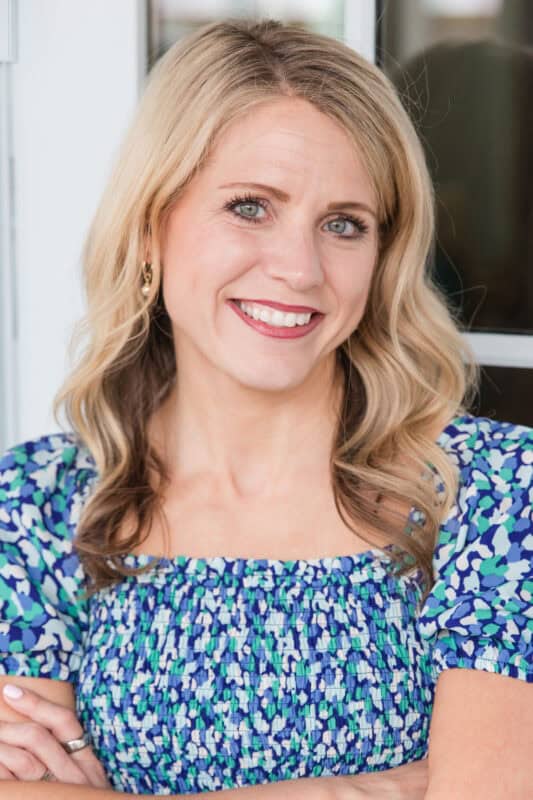
Crystal Paine is a New York Times bestselling author, popular speaker, podcast host of The Crystal Paine Show, and the founder of one of the top personal finance blogs on the web, MoneySavingMom.com. She started blogging about frugality during her husband’s law school years while living on a tight “beans and rice” budget—mastering couponing, price matching, menu planning, and creative thrift to make ends meet. Today, Crystal is passionate about helping women across the globe live with more joy, purpose, and financial peace. Her heart beats for encouraging others with the hope of the Gospel, raising awareness for foster care and disabilities, and finding great deals at the grocery store. She lives with her husband and six children in the Nashville, Tennessee area.
GIVEAWAY TIME!!
Comment below and you’ll be entered to win one of TWO copies of Crystal’s book. (US Residents only, thanks for understanding!)
We’ll choose winners next Wednesday, November 4th!
Answer either (or both) of these questions to be entered to win:
1. Which of the 7 habits listed above, do you most look forward to learning about. (I’m going straight to #6, haha!)
2. (I’m curious!) How would you describe the way you were raised when it comes to understanding finances? – And with that — if you like — what do you hope to do different with your children?
COMMENT BELOW! 😉

#6- I don’t like to pay full price so I would like to learn to practice #6 more.
My parents were frugal and very intentional with their money and I try to live the same way.
I was taught to work hard for what you want/need, save and don’t spend money you don’t have to spend. I taught those values to my son along with when and how to invest.
Number 3 is one that I would like to learn more about. A budget feels restrictive, but I know that money without a plan gets spent quicker and easier. As a Financial Advisor, I enjoy helping others learn about their money, feel confident in a plan, and help them achieve their financial goals.
Number 5 for me. I grow weary over time with a budget or financial plan so I think accountability would help with that. Excited to get my hands on this book!
I’m interested in learning about #5, it sounds intriguing. I feel like the biggest thing I took from my parents is living below my means and it has been a lesson I have really tried to live out to my kids.